Best Suburbs to Invest in Perth in 2026
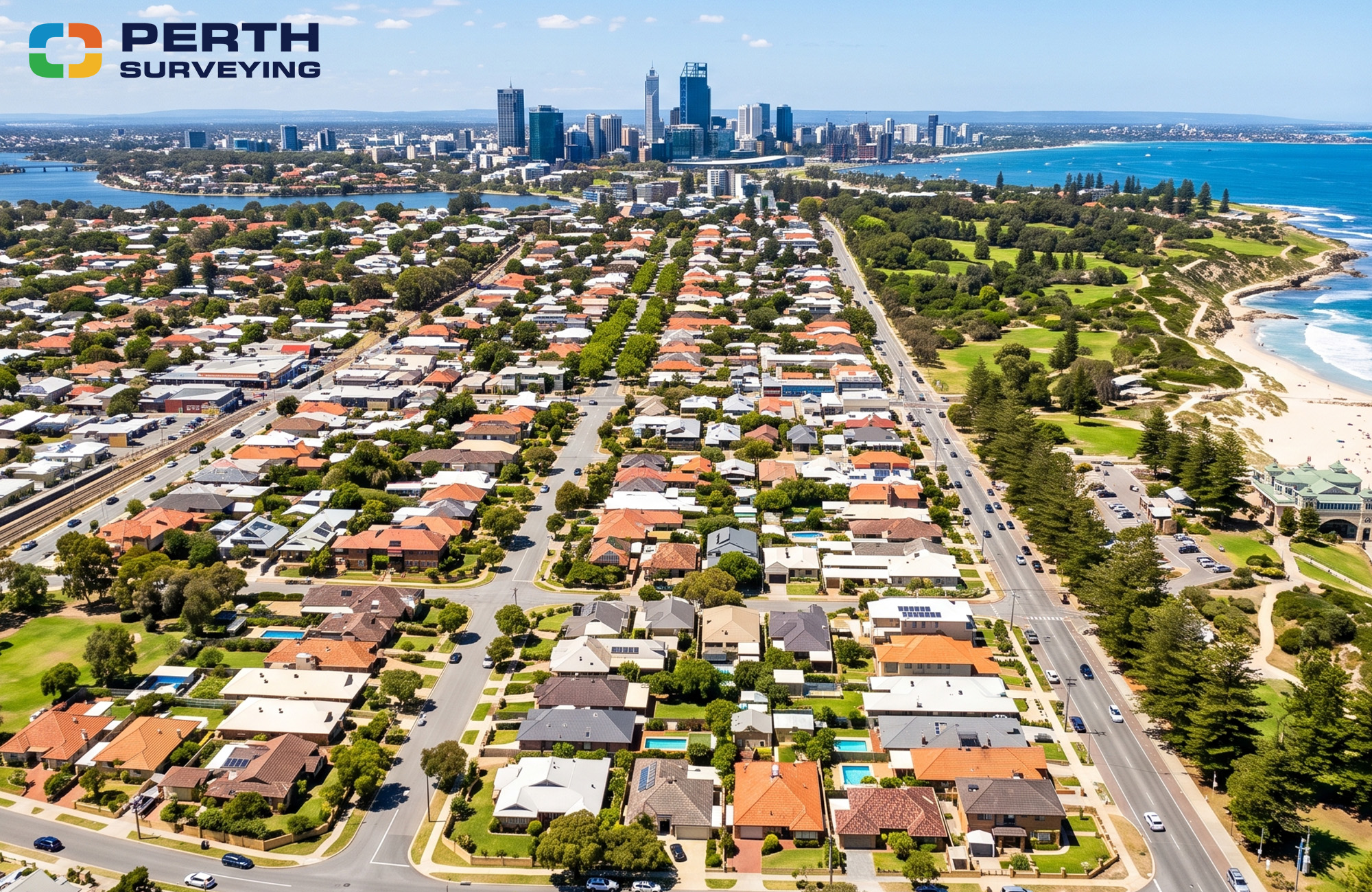
10 Perth Suburbs Worth Investigating in 2026
A cheap property can still be a poor investment. A fast-growing suburb may already be fully priced, and a large block may offer less development potential than it appears to.
The best suburbs to invest in Perth cannot be identified by following headlines, copying last year’s success stories or simply choosing the lowest-priced property. A sound decision considers rental demand, transport, local amenities, future housing supply and, where development is planned, the practical potential of the individual site.
A long-term investor may prioritise dependable rental demand and resale appeal. A small-scale developer may need more: a site that can be subdivided, developed behind an existing home or redeveloped without unexpected access, servicing, boundary or site-cost issues.
The suburb may attract your attention, but the individual property will determine whether the plan works.
In this guide, we examine ten Perth suburbs worth investigating in 2026. We look at the investment case for each area, the types of opportunities that may exist and the risks that should be checked before making an offer.
The aim is not simply to buy in a popular postcode. It is to find a property where the financial case and the physical site conditions support the same strategy.
This article provides general information only and does not constitute financial, legal or planning advice. Investment performance and development potential vary between properties. Buyers should obtain property-specific advice before making a purchase or development decision.
What Makes a Perth Suburb Worth Investing in?
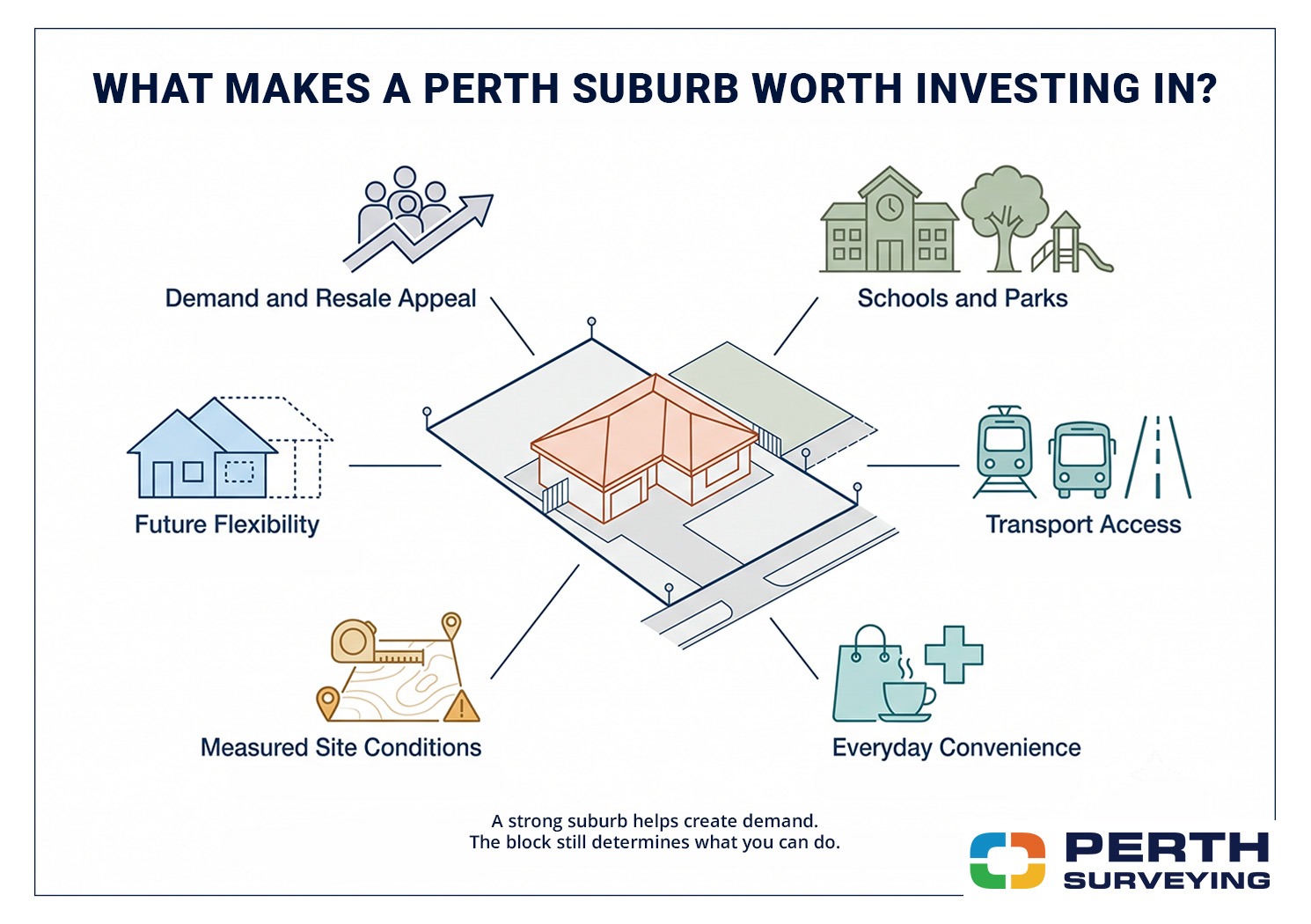
A suburb is not automatically a good investment because it appears on a hotspot list. It becomes worth investigating when its location, demand and property fundamentals support your particular strategy.
For a long-term investor, this may mean dependable rental demand and broad resale appeal. For a small-scale developer, it may mean finding a site that can support subdivision, a retained-home development or redevelopment at a commercially realistic cost.
These strategies have different risks, costs and measures of success, so they should be assessed separately.
What Property Investors Should Look For
Start by checking whether the suburb offers a practical combination of the following factors:
- Rental demand: Are tenants actively looking in the area?
- Purchase price: How does the asking price compare with recent sales, achievable rent and expected holding costs?
- Rental return: How does the achievable rent compare with the purchase price and ongoing ownership costs?
- Low vacancy: Are properties generally leased without long periods sitting empty?
- Employment access: Can residents reach major employment centres easily?
- Transport connections: Is the suburb served by rail, major roads or reliable public transport?
- Schools and amenities: Are shops, schools, parks, medical services and other essentials nearby?
- Resale appeal: Is the property likely to attract owner-occupiers as well as investors when it is eventually sold?
- Competing housing supply: How much established and new housing is likely to compete for the same buyers and tenants?
No single point proves that a suburb is a good investment.
A high rental yield may reflect greater risk or weaker resale demand. A low purchase price may indicate limited tenant or buyer interest, while a popular suburb may already be priced at a level that reduces the potential return.
Purchase price, achievable rent, holding costs, vacancy risk and resale demand should be considered together.
What Small-Scale Property Developers Should Check
Development potential requires a closer examination.
A large block may appear promising, but its practical development potential can change once access, planning controls, service locations, boundaries and site conditions are properly investigated.
Before buying, investigate:
- What type of development may be permitted?
- Is there enough usable land for the intended project?
- Can the proposed lots or dwellings be arranged efficiently?
- Is there enough width for a driveway or rear access?
- Can the house be retained while developing the rear?
- Are water, power and sewer connections practical?
- Do any title restrictions affect the project?
- Will slope, retaining walls or drainage increase construction costs?
- Must the existing house be removed before development can begin?
- What are completed lots or dwellings likely to sell for?
The suburb may create interest, but the individual site determines whether the proposed development is physically and commercially practical.
A property can sit in a strong suburb and still be unsuitable for development. Narrow access, poorly positioned services, difficult site levels or planning constraints may reduce the usable area and weaken the project.
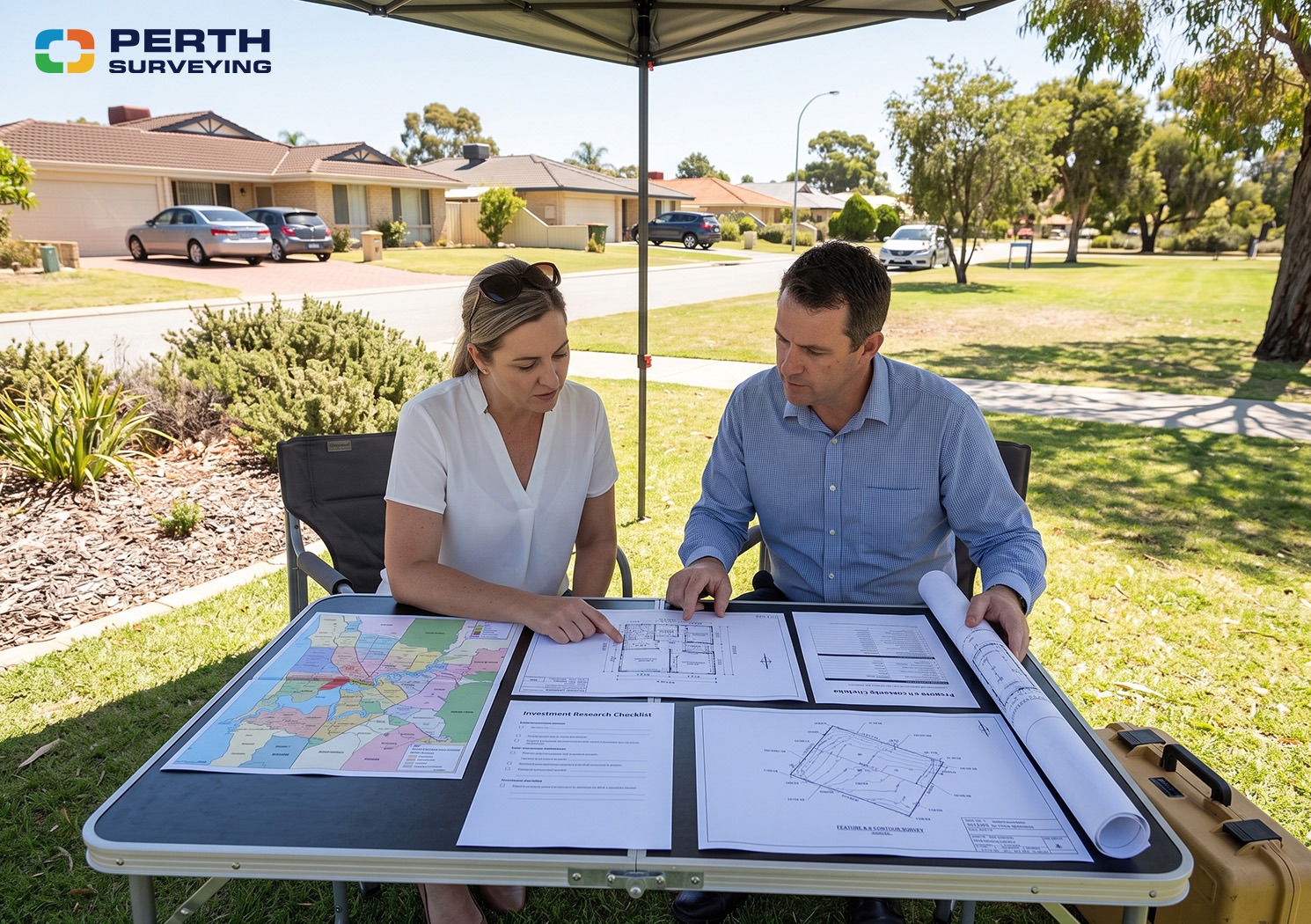
The postcode should begin the investigation, not complete it. The individual site must still support the proposed layout and development strategy. A feature and contour survey can document existing features, structures and site levels, while a licensed boundary survey may be required where accurate boundary definition is critical.
Perth’s Property Market in 2026: Opportunity With Less Room for Error
Perth entered 2026 with several conditions supporting property demand, including population growth, limited rental availability and strong competition for established homes.
But opportunity does not mean every purchase is a good one.
According to REIWA market data updated in July 2026, Perth’s median house price was approximately $935,000 for the 12 months ending June 2026. At that price level, investors have less room to recover from overpaying, choosing the wrong property or underestimating development costs.
As prices increase, differences between well-located, practical properties and compromised sites may become more important. Buyers who assess both the financial position and physical site conditions will be better placed to manage risk.
Population Growth Continues to Support Demand
Population growth is one of the forces supporting housing demand across Perth.
More residents can increase demand for established homes, rental properties and additional housing, particularly in suburbs with useful transport, employment access and everyday services. Australian Bureau of Statistics data shows that Greater Perth’s population increased by 2.4 per cent in 2024–25, the highest growth rate recorded among Australia’s capital cities.
That growth can support:
- Demand for established family homes
- Competition for well-located rental properties
- Greater use of transport, schools and local services
- Demand for smaller and more affordable housing
- Continued pressure for infill and new land development
But population growth is a citywide figure.
It does not tell you which street to buy in. It does not show whether tenants will prefer one property over another. And it does not prove that a proposed development will be profitable.
Population growth may support broader housing demand, but the performance of an individual property will still depend on its location, layout, condition and value relative to competing properties.
Rental Conditions Remain Tight
REIWA reported a Perth rental vacancy rate of 2.1 per cent in June 2026, down from 2.7 per cent in June 2025. This indicates that rental availability remained limited, even though conditions were not as tight as the extreme shortages recorded earlier in the property cycle.
For investors, a tight rental market can mean:
- A larger pool of prospective tenants
- Shorter vacancy periods for suitable properties
- Stronger competition for well-presented homes
- More recent comparable rental evidence
It can also encourage buyers to become careless.
Current rental demand is useful, but investors should also consider whether future tenants are likely to want that type of property, in that location, at the rent required to support the investment.
A high weekly rent is attractive.
A high weekly rent attached to an excessive purchase price may not be.
The relevant figure is not the advertised weekly rent alone. Investors should consider finance, council and water rates, insurance, property management, maintenance, vacancy and any applicable strata costs.
Rising Prices Make Property Selection More Important
At the beginning of 2026, REIWA forecast that Perth’s median house price could rise by more than 10 per cent during the year. It also forecast stronger growth for units, reflecting affordability pressures and increased demand for lower-priced housing.
By the March quarter, REIWA reported preliminary quarterly growth of 4.1 per cent for houses and 5.8 per cent for units.
These figures help explain the strong interest in Perth property.
They also explain why investors must become more disciplined.
As prices rise:
- Rental yield may fall if rents do not rise at the same pace
- Buyers may pay too much for basic development potential
- Renovation and subdivision margins may become narrower
- More investors may compete for the same properties
- Lower-quality homes may be carried upward by the broader market
- Older suburb price and rental guides may no longer reflect current market conditions
A rising market may temporarily disguise a poorly selected purchase, but it cannot remove an easement, widen restricted access, reduce unexpected site costs or make an impractical subdivision layout workable.
Price growth may support an investment outcome, but it should not replace careful property selection and site-specific due diligence.
Future Housing Supply May Create Opportunity and Competition
Western Australia is responding to housing demand with more approvals, construction and infrastructure investment.
The WA Government reported 25,050 dwelling approvals across Western Australia in the year to February 2026 and announced more than $1.3 billion for land development and enabling infrastructure.
More supply is necessary for a growing city.
For an investor, however, new supply must be examined suburb by suburb.
New housing and infrastructure investment may improve an area by supporting:
- New shops and services
- Better roads and transport
- Schools and community facilities
- A larger resident population
- Greater recognition of the suburb
It may also create competition.
An established property can be harder to sell or lease when buyers and tenants have many new homes to choose from. This is particularly important in outer growth corridors where future land releases may continue for years.
Investors should ask:
- How much competing housing is planned?
- Will future buyers prefer new homes?
- Is the property close to infrastructure that is operating now, under construction or only proposed?
- Does the suburb have employment, services and transport beyond new housing estates?
- What will make this particular property more desirable than the next one?
New supply is not automatically a problem. The risk comes from failing to assess how much competition it may create for the selected property.
10 Perth Suburbs Worth Investigating in 2026
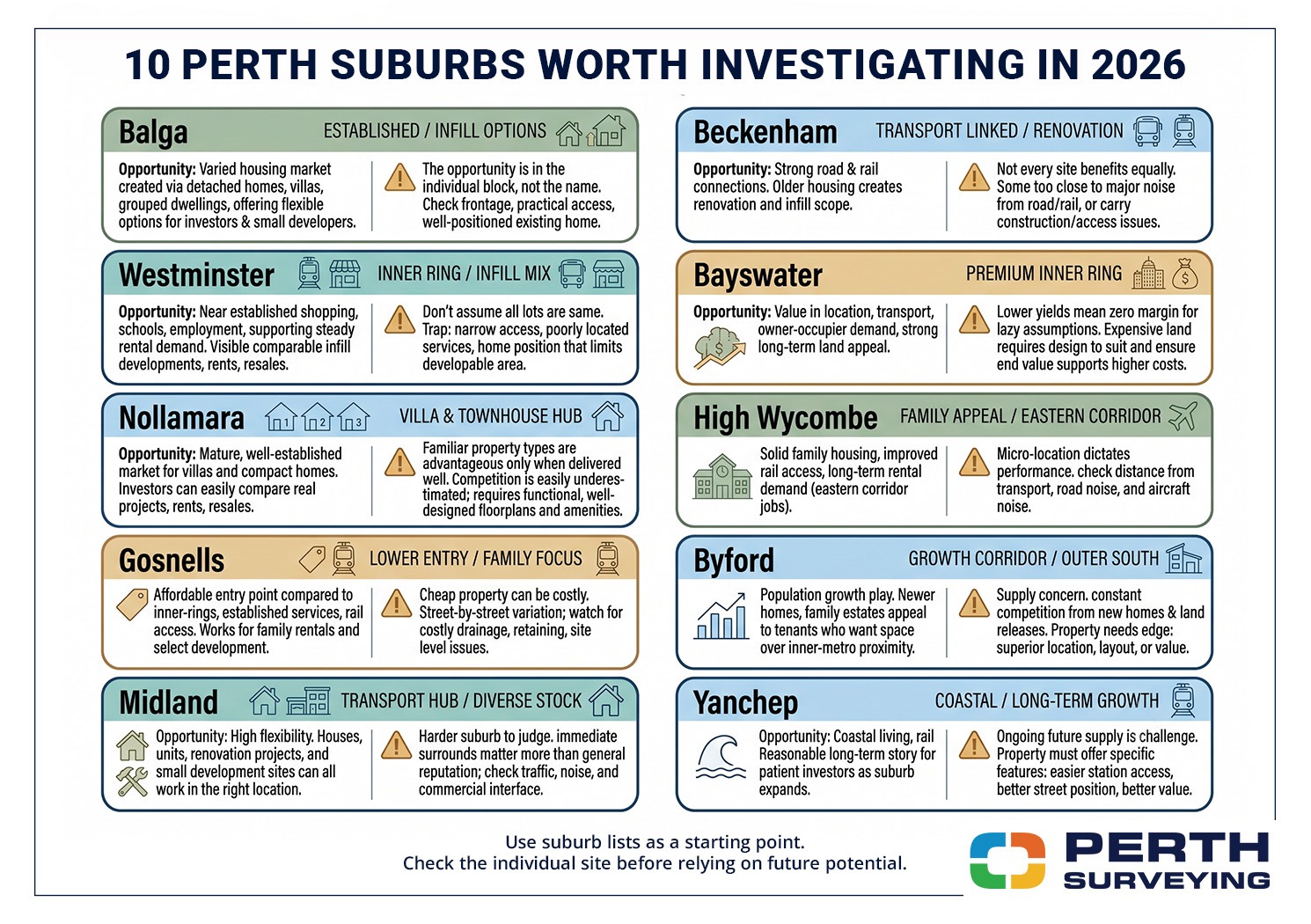
A suburb can look good on paper and still produce a poor result.
The purchase price may be attractive. The rent may look strong. The block may even seem large enough to develop. But unless those factors support the same strategy, the property can quickly become expensive.
These ten Perth suburbs deserve a closer look for different reasons. Some offer established rental demand. Others have infill potential, transport links or long-term growth prospects.
No property should be purchased on suburb reputation alone.
The suburbs were selected as an editorial shortlist based on broad factors including transport access, established amenities, housing mix, rental appeal, infill activity and future supply. The list is not a quantitative ranking, and individual properties require separate financial, planning and surveying assessment.
Balga
Balga now has a more varied housing market than its historical reputation may suggest, with detached homes, villas and grouped dwellings providing different options for investors and small-scale developers. That variety creates options for landlords and small developers alike.
The better opportunities are usually found in the individual block, not the suburb name. A property with adequate frontage, practical access and a well-positioned existing home may offer greater development flexibility than a larger site with significant layout constraints.
Westminster
Westminster sits close to established shopping, schools and employment areas, which helps support steady rental demand. It also has a visible mix of older homes and newer infill development. This gives buyers an opportunity to review nearby comparable developments, rental results and resale outcomes.
The trap is assuming every large lot offers the same potential. Narrow access, poorly located services or an existing home positioned deep within the site may reduce the developable area and limit the available layout options.
Nollamara
Nollamara has a well-established market for villas, townhouses and compact homes. That is useful because investors can compare real projects, rents and resale results before buying. It also means competition is easy to underestimate.
A standard development may face significant competition from similar villas and townhouses already available in the area. A feasibility assessment should allow for functional floorplans, practical parking, storage, visitor access and usable outdoor areas. In Nollamara, a familiar property type can be an advantage, but only when it is delivered well.
Gosnells
Gosnells may offer a lower purchase-price entry point than many inner- and middle-ring suburbs, together with established services and rail access. It can work for family rentals, long-term holds and selected development projects. But the suburb is broad, and conditions vary from street to street.
A cheap property can become costly when drainage, retaining walls or site levels are ignored. Properties with practical access, manageable site levels and straightforward servicing may be easier to assess, design and develop.
Midland
Midland includes detached houses, units, renovation opportunities and selected small development sites, giving buyers several property types to consider. Houses, units, renovation projects and small development sites can all make sense in the right location. That flexibility is also what makes the suburb harder to judge.
One pocket may suit families and long-term tenants. Another may be affected by traffic, noise or commercial activity. Property selection requires close attention to the immediate street, adjoining land uses, traffic, noise and access to services and transport. The property’s immediate surroundings matter far more than the suburb’s overall reputation.
Beckenham
Beckenham offers road and rail connections, established amenities and a mix of older and newer housing south of the river. Older housing also creates opportunities for renovation and infill.
Still, not every site benefits equally from the suburb’s location. Some properties sit too close to major roads or rail lines. Other sites may present restricted construction access, traffic-management requirements or constraints associated with nearby major roads and rail infrastructure. A smaller site with practical access and fewer physical constraints may offer greater development flexibility than a larger but difficult site.
Bayswater
Bayswater generally requires a higher purchase budget than several other suburbs on this list and may suit investors prioritising location, transport and long-term owner-occupier appeal. Its value lies in location, transport, owner-occupier demand and long-term land appeal.
Rental yield may be less impressive than in outer suburbs, so the purchase needs a stronger case. Development can work, but only where the design suits the area, and the end value supports the higher costs. Higher land and development costs leave less room for inaccurate feasibility assumptions.
High Wycombe
High Wycombe combines family housing, established services and improved rail access. That gives it a solid base for long-term rental demand, particularly among households working in Perth’s eastern corridor.
High Wycombe may be more relevant to buyers seeking practical family housing and long-term rental demand than short-term development opportunities. Distance from transport, road noise and aircraft noise can still affect appeal. Properties with similar layouts may attract different levels of demand depending on their proximity to the station, major roads, flight paths, schools and local amenities.
Byford
Byford may suit investors with a longer holding period who are comfortable assessing future population growth, transport access and expanding local services. Newer homes and family-friendly estates make it attractive to tenants who want space without paying inner-metro prices.
The concern is supply. Buyers may face constant competition from new homes and future land releases. That does not make Byford a poor investment, but it does mean the property needs an edge. An established property may compete more effectively with new housing when it offers a stronger location, larger usable land area, mature landscaping or better value.
Yanchep
Yanchep offers coastal living, rail access and a growing residential base. These features may support long-term demand, although the timing and scale of future housing supply remain important considerations. The challenge is that more housing will continue to arrive.
New supply can improve the suburb, but it also gives future buyers and tenants plenty of choice. A property may require a clear point of difference, such as practical station access, a stronger street position, larger land or better value than competing new homes. Growth alone is not enough.
How to Assess an Individual Property
These suburbs suit different budgets, property types and investment timeframes. Before proceeding, assess whether the achievable rent or likely end value aligns with the property’s access, services, site levels, planning controls and estimated project costs.
A suburb may provide a useful starting point, but the individual property must support the intended strategy.
Final Thoughts: Buy the Property, Not the Hype
A well-known suburb can still contain an unsuitable property, and a large block can still be difficult or costly to develop. Before committing, buyers should consider whether the purchase price, achievable rent, likely end value and physical site conditions support the same strategy.
That means looking beyond the postcode and investigating access, services, boundaries, levels and planning constraints at property level.
That is where good decisions begin.
Perth Surveying helps property owners and small-scale developers understand the physical site conditions that may affect their plans. Our services include feature and contour surveys, licensed boundary surveys, subdivision surveys and subdivision administration, delivered with clear communication, reliable timelines and local WA knowledge.
Planning your next property investment or small development?
Call Perth Surveying on 08 9303 2407, email sales@perthsurveying.com.au, or visit perthsurveying.com.au to discuss the site before you move forward.
FAQs
Which Perth suburb is best for property investment?
There is no single best suburb for every investor. The right area depends on your budget, preferred property type, rental objectives, holding period and whether development forms part of the strategy. Assess the individual property as carefully as the suburb.
How can I tell if a Perth property can be subdivided?
Subdivision potential depends on planning controls, usable site area, frontage, access, services, easements, site levels and the position of the existing home. Zoning and lot size alone do not confirm that subdivision will be practical or approved. Obtain property-specific planning and surveying advice before proceeding.
What survey information may be useful before buying a development site?
Depending on the proposed development, survey information may help identify site levels, existing features, access conditions and boundary considerations. A feature and contour survey may support early design work, while a licensed boundary survey may be required where boundary certainty is critical.
What should I check before designing a subdivision?
Before design begins, investigate the site’s planning controls, usable area, access, services, easements, boundaries, levels, drainage and existing structures. Early site information can help your designer and other advisers identify potential constraints before detailed work progresses.
