Property Boundary Surveys Perth
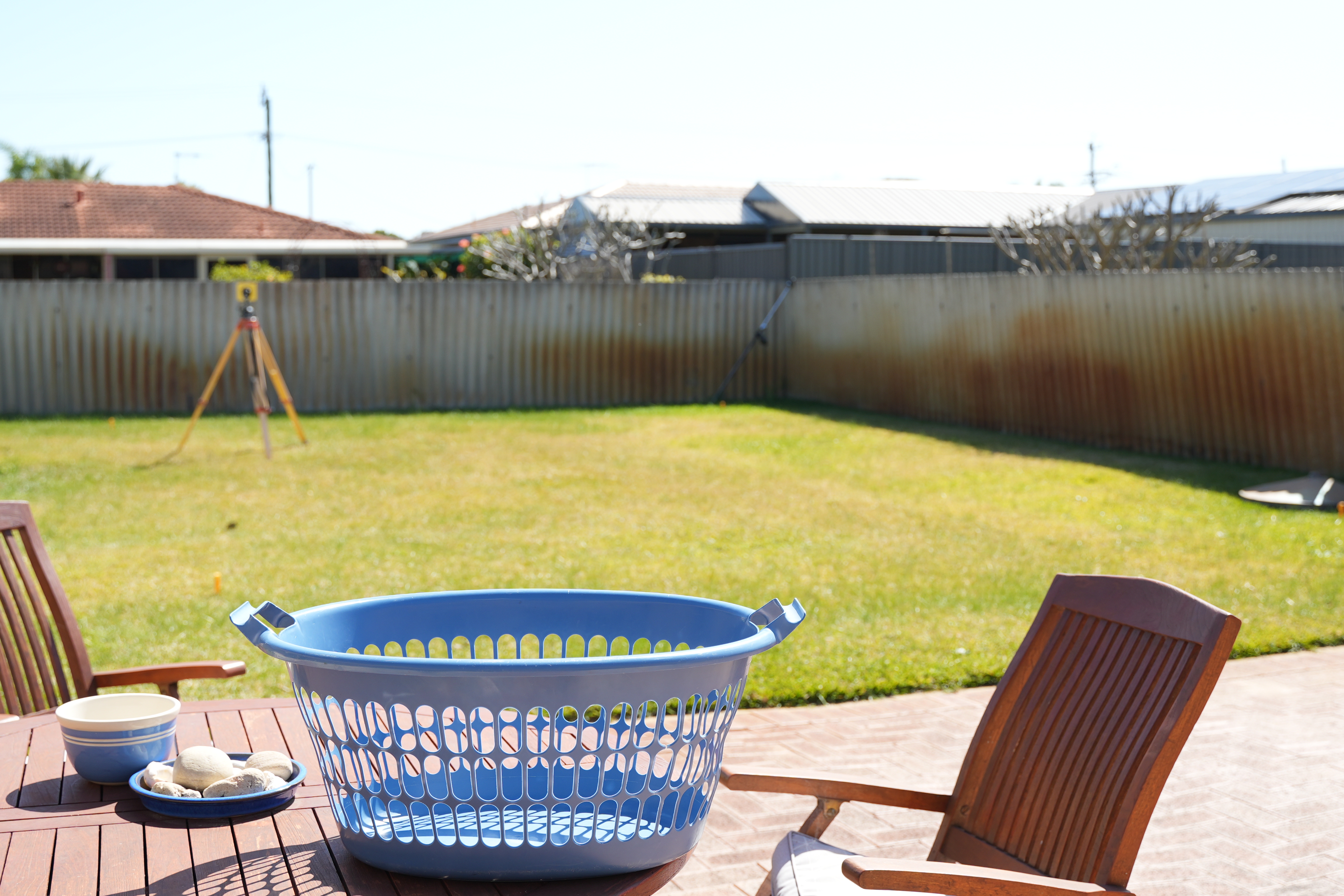
Property Boundaries Made Clear for Perth Homes
Property boundaries can seem straightforward until you need to build, renovate, install a fence, subdivide or resolve a neighbour concern. Most homeowners assume the fence shows the exact edge of the block, but that is not always the case. A fence, retaining wall, driveway or garden bed may give a rough idea, but your legal boundary is confirmed through survey records and professional boundary definition.
That matters because small boundary assumptions can create expensive problems. A garage placed too close to a boundary, a pool fence built in the wrong position or a neighbour dispute over a dividing fence can slow down a project quickly.
For Perth homeowners, builders, designers and small developers, understanding the legal boundary is about certainty before decisions are made. When the boundary is clear, decisions become easier. Designs are cleaner, approvals are smoother, and everyone has a better starting point.
What Property Line Home Boundaries Actually Mean
Your property line is the legal edge of your land. It separates your lot from your neighbour’s land, a road reserve, a laneway, public land or another adjoining parcel.
A property boundary is not based on guesswork. It is tied to land title information, survey plans, previous surveys, deposited plans, field records and physical evidence found on or near the site. Landgate notes that survey plans are the official record of legal land boundaries and usually show lot dimensions, shape and size.
In everyday terms, your boundary shows where your land starts and finishes. This can affect where you build, where you place a fence, how you manage setbacks and whether part of a structure may be encroaching onto another property.
Why the Fence Is Not Always the Boundary
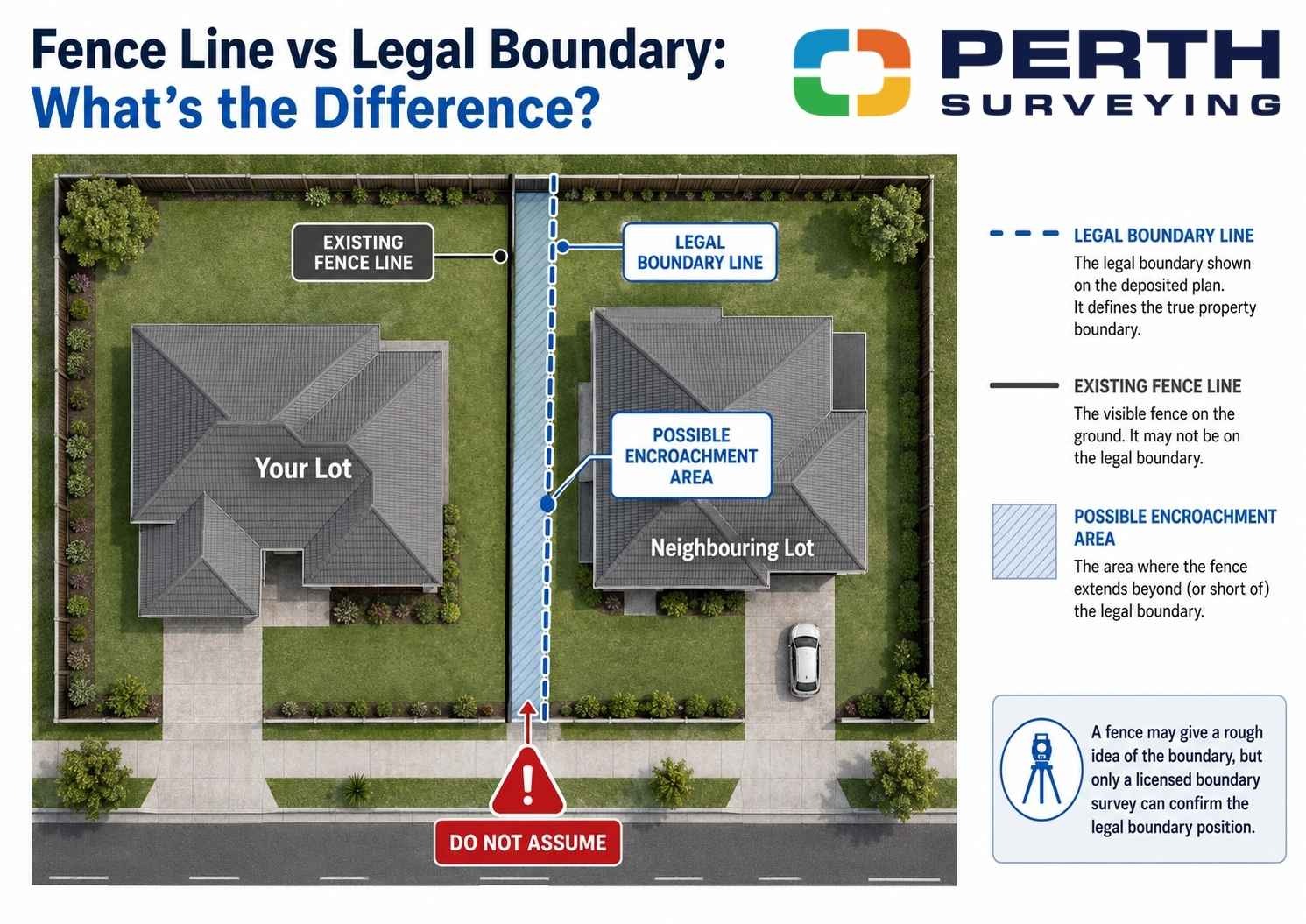
It is common to hear someone say, “The fence is the boundary.” Sometimes that is true. Sometimes it is not.
Fences can be built slightly inside or outside the legal boundary. Older properties may have fencing that has shifted over time. A fence may have been installed for convenience rather than accuracy. In some cases, owners may have agreed to place a fence along a practical line even when it does not perfectly match the legal boundary.
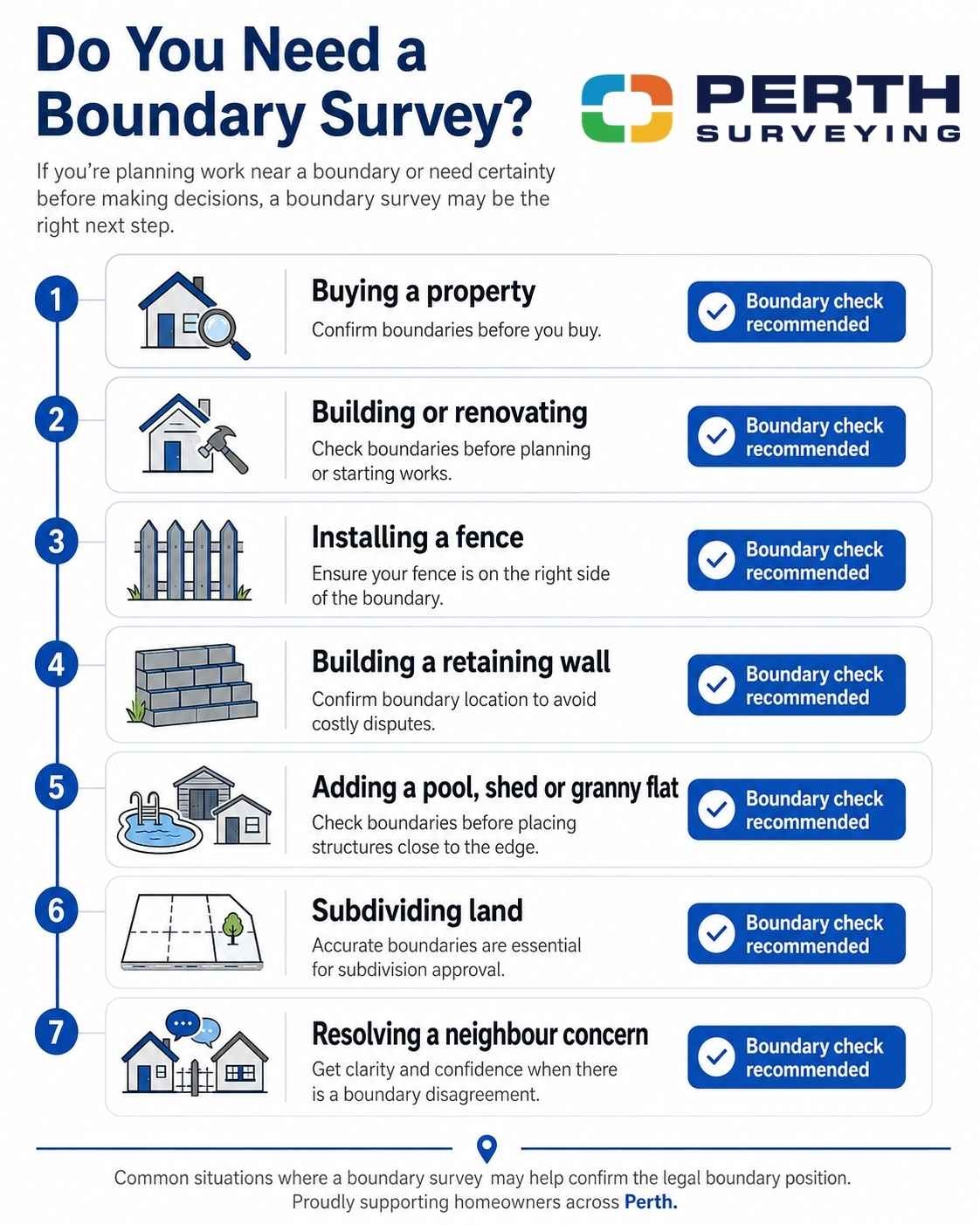
This is why relying only on a fence can be risky when planning work such as:
- A new home built
- A renovation or extension
- A garage or carport
- A pool or outdoor structure
- A retaining wall
- A subdivision
- A new dividing fence
The WA Government dividing fences guide explains that when neighbours disagree on the accurate location of a boundary line, they may have the boundary established by a land surveyor.
The safest approach is simple. Confirm the boundary before you commit money to design, approvals or construction.
When You Should Check Your Boundary
Not every small job around the home requires a boundary survey. However, there are situations where checking your boundary is a smart early step.
Before Buying A Property
When buying a property, it is easy to focus on the house, location and price. The land itself deserves the same level of attention.
A boundary check can help identify whether fences, walls, sheds or other improvements appear to match the legal boundary. This can be especially helpful for older Perth homes, corner lots, irregular blocks and properties with rear laneway access.
A boundary issue after settlement can be costly, stressful and difficult to resolve.
Before Building Or Renovating
Builders and designers need reliable site information before plans, approvals and construction schedules are locked in. If the boundary position is unclear, it can affect setbacks, design placement, site access and compliance.
A licensed boundary survey gives your builder or designer a clearer base for decision-making. It can also reduce the risk of costly redesigns or site delays later in the process.
Before Installing A Fence Or Retaining Wall
Dividing fences can create tension between neighbours, especially when the cost is shared or the exact boundary position is disputed. A boundary survey can make the conversation more practical by providing an accurate reference point. If you're planning to install or replace fencing, our guide explains how a boundary survey helps with fence placement before work begins.
Retaining walls need even more care. They can involve structural, drainage and local government considerations, so it is important to know where the legal boundary sits before work begins.
Before Subdividing
Subdivision depends on accurate land information. Lot size, dimensions, access, services and boundary position all influence what may be possible.
If you are exploring subdivision potential, confirmed boundary information can support better feasibility advice, clearer lot planning and a stronger starting point for approvals.
How A Licensed Boundary Survey Helps
A licensed boundary survey confirms the location of a property boundary using professional survey methods and available land records. It is different from a basic online map check or visual estimate.
Landgate’s Map Viewer Plus can display property and administrative boundaries and help users view land information, but professional survey work is still needed when the exact on-ground boundary position must be confirmed.
A licensed boundary survey can help with:
- Confirming the legal boundary position
- Identifying existing survey marks where available
- Showing how buildings, fences, retaining walls and other site features relate to the legal boundary
- Supporting design and construction decisions
- Reducing the risk of neighbour disputes
- Giving owners, builders, designers and consultants a clear reference point before work begins
For builders, it supports site readiness and construction scheduling. For homeowners, it gives confidence before making decisions. For developers, it creates a stronger foundation for feasibility, subdivision and approvals.
What Happens During A Boundary Survey
Before boundary points are confirmed, the surveyor reviews land records, measures the site and assesses the available survey evidence. This helps ensure the final boundary position is based on reliable evidence, not guesswork. This gives homeowners, builders and developers clearer information before they commit to design, approvals or construction.
Research And Records Review
Before fieldwork begins, the survey team reviews relevant land and survey records. This may include title information, deposited plans, previous survey data and other records that help the surveyor interpret the legal boundary.
This step is important because the legal boundary is not simply measured from the nearest fence. It is assessed using recognised survey evidence.
Site Measurement
A surveyor attends the property and takes measurements using professional equipment. They may look for existing survey marks, check adjoining features and measure structures, fences, walls and other relevant site details.
The aim is to connect what is found on site with the legal survey information, rather than relying on fences or visual estimates alone.
Boundary Analysis
The survey information is then assessed. This is where the surveyor compares field measurements, records and site evidence to determine the boundary position.
This stage requires careful professional judgement, especially on older properties where fences, walls or other features may not align neatly with the legal boundary.
Plan Or Report Delivery
Depending on the scope, the final deliverable may include a plan, sketch, marked boundary points or a report explaining relevant findings. Perth Surveying focuses on clear deliverables, clear timelines and practical next steps, so homeowners, builders and designers know what to do next.
Common Boundary Issues Perth Property Owners Face
Boundary issues are not always dramatic. Often, they begin as small uncertainties.
A homeowner may want to replace an old fence but is unsure whether the existing line is correct. A builder may need to confirm setbacks before starting site works. A designer may need reliable information before finalising plans. A developer may need to understand whether a block has enough usable land for subdivision.
Common issues include:
- Fences that do not match legal boundaries
- Sheds or walls built close to a boundary
- Neighbour concerns about encroachment
- Unclear rear boundaries on older blocks
- Retaining walls near the property edge
- Irregular lot shapes
- Subdivision questions around lot size and access
The earlier these questions are handled, the easier they are to manage.
Property Line Home Boundaries For Builders And Designers
For builders and designers, a boundary question is not just technical. It can affect programme, cost, compliance and client confidence. It can affect programme, cost and client confidence.
A site with unclear boundaries can cause delays before slab setout, earthworks, retaining walls, fencing or final design work. If the boundary is confirmed early, the project team can plan with greater confidence.
Perth Surveying supports builders and designers with reliable scheduling, clear communication and high-quality plan outputs. That means fewer unknowns at the start of the job and better information for the people who need to keep the project moving.
Good surveying is not just about measurement. It gives the next stage of the project a reliable foundation.
Property Line Home Boundaries For Homeowners
For homeowners, boundary information can feel overwhelming. You may not know what documents matter, what council will need or whether a fence has been in the right place for decades.
That is understandable. Most people only deal with property boundaries a few times in their lives.
A clear boundary survey can help you move from uncertainty to a practical next step. It gives you a practical answer before you spend money on fencing, plans, approvals or construction.
This is especially valuable if you are planning a renovation, adding a granny flat, installing a pool, building a shed or considering subdivision.
Why Local WA Knowledge Matters
Boundary surveying in Western Australia requires local knowledge of land records, survey practice, subdivision processes and property conditions across Perth Metro and broader WA.
Perth has a wide mix of property types, from older established suburbs to newer estates and infill development sites. You will find older suburbs with long-established fences, coastal properties with irregular features, newer estates with more recent survey control and development areas where subdivision potential is a key part of the decision.
A local WA team understands these conditions and can provide clearer expectations around timing, site requirements and the next steps.
Perth Surveying’s role is to provide accurate surveying, clear timelines and practical guidance so you know what is happening and what comes next.
How To Prepare Before Booking A Boundary Survey
You do not need to know every technical detail before contacting a surveyor. A few details can help the team understand your needs and quote the right scope.
Before booking, try to gather:
- The property address
- A brief reason for the survey
- Any plans or drawings you already have
- Details of proposed building, fencing or subdivision work
- Any known neighbour concerns
- Photos of relevant fences, walls or structures, if useful
This helps Perth Surveying confirm the right survey scope, provide a clearer quote and identify any urgent timing requirements before the job is scheduled.
What To Avoid When Dealing With Boundaries
Boundary mistakes often happen when people rely on assumptions.
Do not start a new fence, retaining wall, extension or structure based only on visual judgment. A long-standing fence is not always legally correct, and boundary questions are easier to manage before a neighbour dispute escalates.
It is also worth avoiding vague instructions. When speaking with your builder, designer or surveyor, be clear about what you need confirmed and why.
Clear questions lead to clearer answers.
Conclusion
Property Line Home Boundaries are more than lines on a plan. They shape what you own, what you can build and how confidently your project can move forward.
For homeowners, a boundary survey can provide peace of mind before fencing, renovating, buying or subdividing. For builders and designers, it supports better planning and fewer delays. For developers, it gives a stronger foundation for feasibility and approvals.
Perth Surveying helps property owners, builders and developers across Perth and WA understand their boundaries with accurate surveys, reliable scheduling and clear communication.
To request a quote or discuss your property boundary needs, contact Perth Surveying on 08 9303 2407, email sales@perthsurveying.com.au or visit perthsurveying.com.au.
FAQs
Can I use an online map to find my exact property boundary?
Online maps can be useful for general information, but they should not be relied on for exact boundary placement. A licensed boundary survey is the right option when you need accurate on-ground confirmation.
Do I need to tell my neighbour before booking a boundary survey?
This depends on the situation and the type of access required. If the survey relates to a dividing fence or shared concern, it is often helpful to communicate early and keep the conversation practical.
How long does a boundary survey take?
Timing depends on the property, available records, site complexity and current scheduling. Perth Surveying will confirm the expected timing when preparing your quote, so you have a clear next step.
