Wheatstone Construction Village Surveying Project
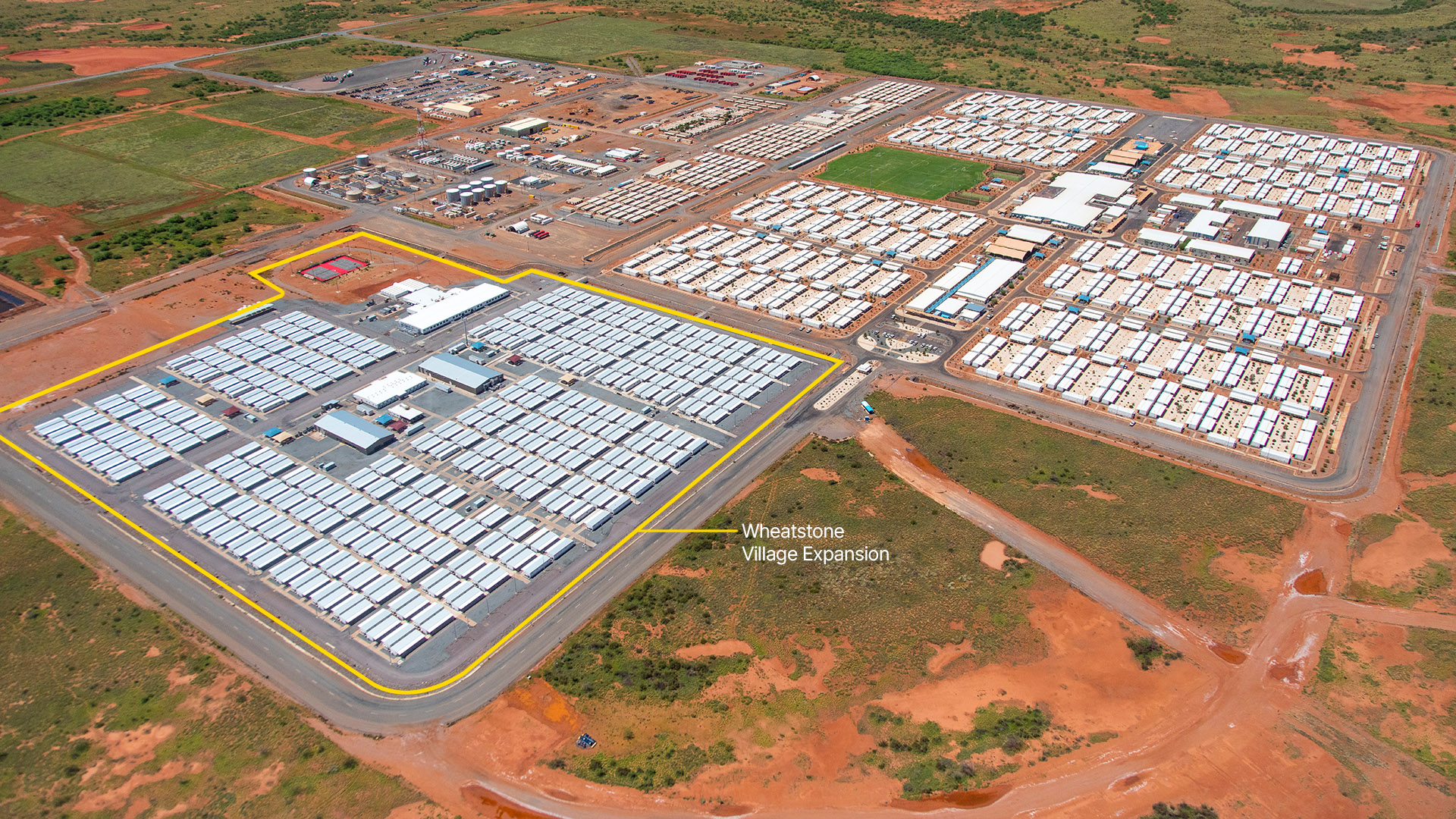
Surveying the Wheatstone Construction Village
The Wheatstone Construction Village was a major workforce accommodation project developed near Onslow to support construction of the wider Wheatstone LNG development. Perth Surveying was appointed as the project surveyor for John Holland Group, with the engagement running from 2011 to 2013.
Designed to accommodate approximately 3,800 people, the village required far more than rows of temporary rooms. It incorporated dining, medical and recreation facilities, along with sporting areas and the supporting infrastructure needed for a large, self-contained workforce community.
Delivering surveying support on a project of this scale required accuracy, coordination and an understanding of how construction activities would progress across multiple work areas. Survey information had to support the delivery team without creating unnecessary delays in an already demanding regional construction program.
Project Overview
The construction village formed part of Chevron’s Wheatstone LNG development near Onslow on Western Australia’s Pilbara coast.
John Holland was engaged by Bechtel Australia to design and construct the accommodation village. The contract was valued at approximately $370 million, making it one of the first major construction packages awarded for the wider Wheatstone development.
The village was planned to include:
- Accommodation for approximately 3,800 people
- Recreation centres
- A football oval
- Swimming facilities
- Tennis courts
- A medical centre
- Dining facilities
- Operational and supporting buildings
The scale of the project can also be seen in its modular construction program. Architectural project records indicate that 952 manufactured building modules were produced over 18 months, with final module deliveries occurring in late 2013.
Key Project Details
- Client: John Holland Group
- Location: Near Onslow, Western Australia
- Perth Surveying Engagement: 2011 to 2013
- Project Type: Remote workforce accommodation village
- Village Capacity: Approximately 3,800 people
- Wider Development: Wheatstone LNG Project
Why the Wheatstone Construction Village Required Precise Coordination
A construction village of this size operates more like a small town than a conventional building site.
Accommodation buildings must connect logically with roads, pathways, dining facilities, recreation areas, utilities and emergency services. Even where modular buildings follow repeatable designs, their position must remain consistent with the approved site layout and associated infrastructure.
Surveying provides the common spatial reference that allows different construction teams to work from the same information.
When civil contractors, building teams, service installers and other trades operate across the same project, small positioning differences can become significant. An error affecting one building may also affect nearby roads, drainage, services or connecting structures.
Reliable survey control helps reduce these coordination risks before they become expensive construction problems.
The Wheatstone Construction Village also had to be delivered as part of a much larger resource project. The village was essential infrastructure because it would accommodate the workforce constructing the LNG facilities.
This meant surveying activities had to support the broader delivery program, not operate separately from it.
Perth Surveying’s Role at the Wheatstone Construction Village
Perth Surveying provided project surveying support to John Holland during the village construction period.
The work required an organised and responsive surveying approach suited to a large regional site. Surveying had to align with construction priorities, approved information and the sequence in which different parts of the village were being delivered.
Although individual work areas changed as construction progressed, several principles remained essential.
Accuracy Across the Site
Large projects need a consistent point of reference.
Buildings, roads, facilities and infrastructure cannot be positioned independently. They must relate correctly to the same project coordinate system, design information and established survey control.
Maintaining this consistency helps construction teams avoid cumulative errors across the site.
Support for Construction Scheduling
Surveying activities must occur at the correct stage of construction.
Arriving too early may mean that the site is not ready. Arriving too late can leave crews waiting and affect the next scheduled activity.
Project surveyors must therefore understand which work fronts are active, what information is available and when survey support is required.
On a remote project, this coordination becomes especially important. Resources cannot always be moved or replaced as quickly as they can on a metropolitan site.
Clear Communication With the Delivery Team
Surveying information must be accurate, but it must also be communicated clearly.
Construction supervisors need to understand what has been completed, which information was used and whether any issues need to be resolved before work continues.
Prompt communication can prevent uncertainty from spreading across several contractors or work areas.
The value of surveying is not limited to measurements. It also includes providing confidence that construction can proceed from reliable information.
Surveying Challenges in a Remote Construction Village
The Wheatstone Construction Village combined the scale of a major construction project with the logistical demands of a regional Pilbara location.
The onshore Wheatstone facilities were developed approximately 12 kilometres from Onslow. The distance from Perth and the site’s remote operating environment placed additional importance on planning, mobilisation and efficient use of field resources.
Coordinating a Large and Repetitive Site Layout
Modular accommodation villages contain many buildings that can appear similar.
Repetition can improve construction efficiency, but it also creates a risk. A team working from the wrong building reference or grid position may install an otherwise correct element in the incorrect location.
Surveyors must maintain disciplined checking procedures and confirm that the current drawings relate to the correct work area.
Clear naming systems, controlled survey marks and accurate site records all help reduce confusion.
Supporting Multiple Facility Types
The village was not limited to accommodation rooms.
Dining, medical, recreation and operational facilities introduced different building footprints and infrastructure requirements. Sporting areas, roads, pathways and external services also had to work within the overall development layout.
Each area could involve different contractors, drawings and construction stages.
The surveying approach, therefore, needed to remain flexible while preserving consistency across the broader site.
Maintaining Accuracy During Staged Construction
Large villages are generally built in stages rather than as one continuous structure.
Earthworks may be progressing in one area while buildings are being installed elsewhere. Services can be under construction in another zone, with completed sections already being used for access or logistics.
Surveying teams must work around these changing conditions without losing the project reference, connecting each stage.
This requires careful field procedures and strong coordination with site management.
Working Within a Remote Project Environment
Regional construction demands preparation.
Equipment, personnel, access requirements and project documentation need to be organised before work begins. Missing information or unsuitable site access can be more difficult to resolve when the project is a significant distance from metropolitan support.
Remote conditions can also affect travel, working hours and the availability of replacement equipment.
Good preparation is not simply an administrative task. It protects the construction program.
Responding to Design and Program Changes
Major projects rarely remain completely unchanged from the first drawing to final construction.
Design revisions, site conditions and construction sequencing can all affect what the survey team needs to deliver.
The important issue is ensuring that surveyors receive current, approved information before completing work. Clear drawing revision control reduces the risk of superseded information being used in the field.
Where a change creates uncertainty, resolving it before construction proceeds is usually faster and less costly than correcting completed work.
How Reliable Surveying Supports Large Construction Projects
Construction surveying connects design information with physical work on the ground.
For a project such as the Wheatstone Construction Village, this function supports several practical outcomes.
Consistent Positioning
Survey control provides a common reference for buildings, civil works and infrastructure.
This allows separate contractors to deliver their work within the same coordinated site layout.
Reduced Rework Risk
Accurate positioning and verification can identify potential inconsistencies before they become embedded in completed construction.
Avoiding rework is particularly important on remote projects, where labour, equipment and replacement materials can involve substantial logistical costs.
Better Construction Coordination
Survey information gives supervisors and project managers greater confidence when releasing work areas to the next contractor.
When deliverables and site markings are clear, teams spend less time questioning locations or waiting for confirmation.
More Predictable Progress
Surveying cannot remove every construction delay. It can, however, prevent surveying availability or unclear information from becoming unnecessary obstacles.
Responsive scheduling helps ensure the survey team is available when each work front reaches the relevant stage.
Reliable Project Records
Construction projects generate large volumes of drawings, measurements and field information.
Maintaining organised survey records supports quality assurance and helps project teams understand what information was used during delivery.
What the Wheatstone Construction Village Project Demonstrates
The Wheatstone Construction Village remains an important example of Perth Surveying’s experience supporting major construction work in regional Western Australia.
The project demonstrates the importance of:
- Accurate surveying across a large site
- Reliable coordination with construction teams
- Consistent project control
- Clear field communication
- Planning for remote mobilisation
- Responding to changing construction priorities
- Supporting multiple work areas within one program
It also demonstrates that temporary accommodation projects can require surveying standards comparable with other major infrastructure developments.
Although the buildings may serve a defined construction period, the village must still function safely and efficiently for thousands of people. Accommodation, roads, services and shared facilities must all fit together as intended.
Lessons for Future Regional Construction Projects
The practical lessons from a project of this scale remain relevant to builders, civil contractors and developers working throughout Western Australia.
Involve the Surveying Team Early
Early involvement allows the surveyor to review available information, understand the proposed sequence and plan suitable resources.
It can also identify missing documents or coordination questions before they affect fieldwork.
Provide Current Project Information
Surveyors should receive current drawings, revision details, site contacts and access requirements before mobilisation.
When several contractors are involved, responsibility for issuing approved information should be clear.
Forecast Surveying Requirements
Planning helps the surveying team allocate people and equipment to the required work fronts.
Even when exact dates may change, an indicative program allows potential capacity issues to be addressed early.
Confirm Site Readiness
The required area should be accessible and ready when the surveyor attends.
Plant materials, active excavation or unfinished earthworks can prevent survey activities from being completed efficiently.
Maintain Direct Communication
Surveyors should have access to the supervisor or project representative responsible for the relevant work area.
Questions can then be resolved quickly without relying on information passing through several people.
Conclusion
The Wheatstone Construction Village was a substantial accommodation and infrastructure project supporting one of Western Australia’s major LNG developments.
With capacity for approximately 3,800 people and a diverse range of accommodation, medical, dining and recreation facilities, the village demanded disciplined construction coordination. Perth Surveying supported John Holland as project surveyor from 2011 to 2013.
The project highlights the role accurate, responsive surveying plays in keeping large construction programs moving.
Reliable survey control, clear communication and careful planning give construction teams the certainty needed to proceed confidently, particularly on complex regional sites.
Discuss Your Construction Surveying Requirements
Planning a residential, commercial or regional construction project in Western Australia?
Perth Surveying provides clear deliverables, reliable scheduling and surveying support that helps keep construction moving.
Call 08 9303 2407
Email admin@perthsurveying.com.au
Visit perthsurveying.com.au
FAQs
Can Construction Surveying Support Temporary Buildings?
Yes. Temporary accommodation, site offices and construction facilities still need to be positioned correctly in relation to roads, services, drainage and other structures.
The required surveying scope will depend on the design, project standards and intended period of use.
What Happens When a Design Changes After Survey Work Is Completed?
The revised design should be reviewed against the work already completed.
Additional calculations, fieldwork or setout may be required. Construction should not continue from superseded survey marks without confirming whether they remain valid under the revised design.
Can Surveyors Work Across Several Construction Areas at Once?
Surveying teams can support multiple work fronts when requirements are planned and prioritised clearly.
Providing a forward program allows resources to be assigned according to site readiness, construction sequence and the urgency of each activity.
