WA’s 28-Day Subdivision Response Rule Explained
WA’s 28-Day Subdivision Rule: Is Your Project Ready?
A 28-day response period sounds fast.
For developers, the proposed 28-day local government response period for subdivision engineering drawings could reduce uncertainty during the review process. It may provide clearer timelines, faster feedback and greater confidence when scheduling civil works, consultant inputs and project delivery.
But a faster response is not the same as a faster approval.
If drawings are incomplete, conditions remain unresolved, or consultants are working from conflicting information, the local government may simply respond sooner with a request for changes. A statutory timeframe cannot compensate for poor preparation after lodgement.
The developers most likely to benefit will be those who are ready before the clock starts. That means having accurate survey information, coordinated drawings, clearly assigned responsibilities and a practical system for tracking outstanding conditions.
A Faster Response Window Only Works When the Project Is Ready
A defined response period could give developers greater certainty at a critical stage of the subdivision process. Its value, however, will depend on the quality of the submission and the level of project coordination before the statutory clock begins.
A defined response period may reduce waiting. It does not remove the need for complete drawings, clear responsibilities and reliable project information.
The Promise and the Condition Attached to It
The promise is straightforward: local governments would have a defined period in which to respond to subdivision engineering drawings.
For developers, that could mean fewer open-ended delays and greater confidence when scheduling consultants, civil works and later approval stages.
But the condition is equally important.
The drawings and supporting information must be complete and ready for assessment. Known design issues should be resolved before submission rather than left for the local government to identify.
A faster response does not guarantee faster approval; an incomplete package may simply receive an earlier request for amendments.
What the Proposed 28-Day Response Period Actually Covers
Under the WA Government’s proposed reforms, local governments would be required to respond to proponents within 28 days of receiving engineering drawings for road design and waterways. The measure is a proposed statutory response timeframe at a critical stage of the subdivision process; it is not a guaranteed 28-day approval for the drawings or the wider subdivision.
It should not be confused with a 28-day approval for the entire subdivision.
A response may confirm acceptance, identify required changes or request additional information. It does not automatically satisfy every subdivision condition, complete servicing requirements or progress the project to deposited-plan approval.
That distinction matters.
Developers should treat the proposed period as a clearer review window, not as a substitute for the technical, administrative and construction work still required.
Why the Reform Is a Genuine Opportunity for Developers
Used properly, the reform could improve project planning.
A clearer response window may help developers schedule consultants, manage contractor availability and identify engineering issues earlier. It may also help limit costs associated with prolonged and uncertain review periods.
The greatest opportunity is not simply speed. It is predictability.
When survey information is current, drawings are coordinated, and subdivision conditions are actively managed, the response period can support a more reliable project programme. Whether it saves meaningful time will ultimately depend on project readiness.
The 28-day Clock Cannot Correct an Incomplete Project.
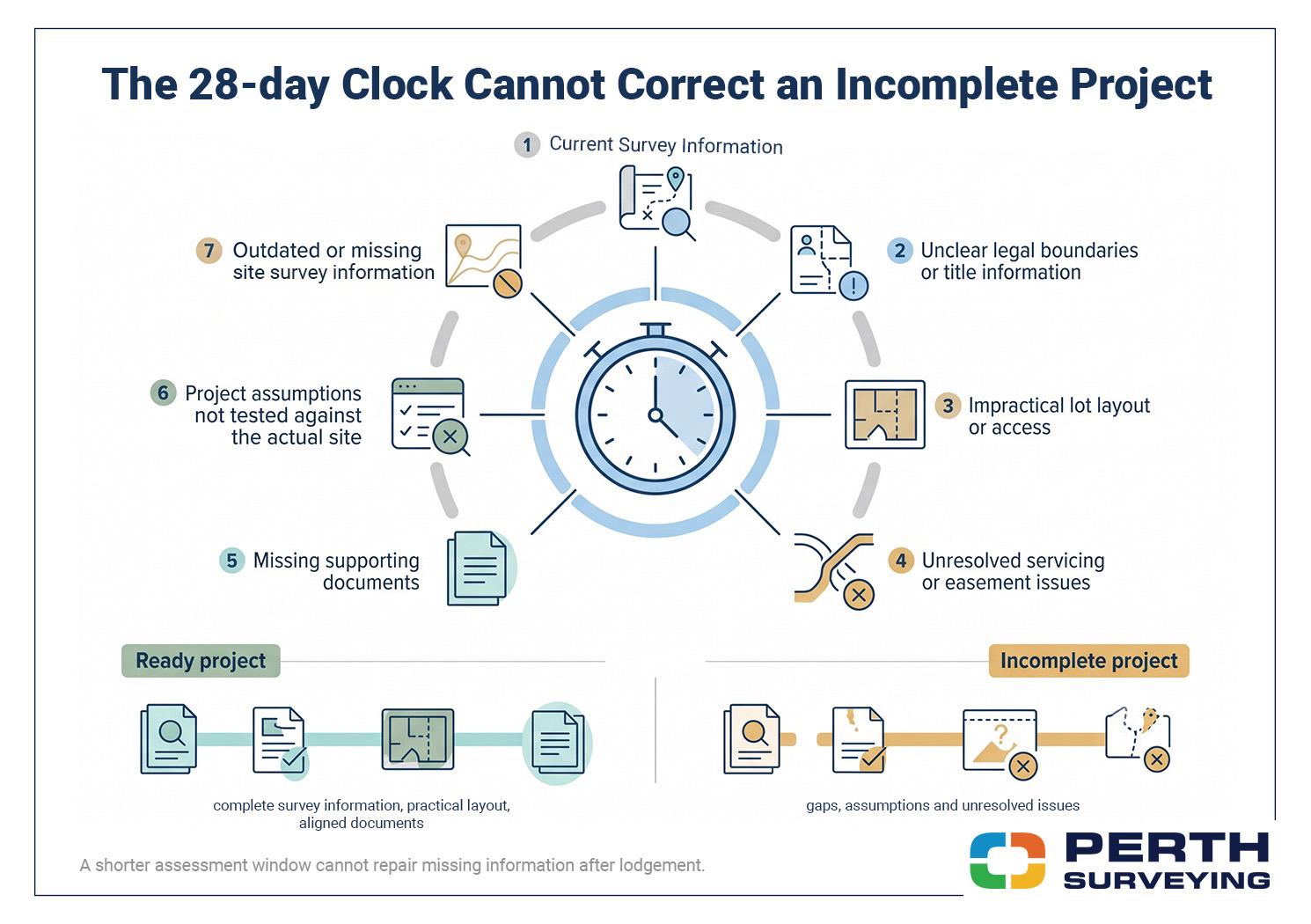
A deadline can accelerate a response. It cannot improve an incomplete submission.
If drawings are incomplete, based on outdated survey information or inconsistent with the approved subdivision plan, the local government may still respond within 28 days—but only to request corrections, clarification or further documents.
The same risk applies when subdivision conditions remain unresolved. Missing servicing details, unclear drainage requirements, conflicting consultant information or incomplete evidence can delay progress even when local government feedback arrives promptly.
Poor coordination makes the problem worse.
When surveyors, engineers, contractors and project managers work from different information, minor discrepancies can become formal queries, creating additional work and further delays.
Developers should therefore judge readiness before submission, not after comments arrive.
A faster statutory response has limited commercial value if an incomplete submission triggers another round of design, documentation and review. Preparation is what protects the wider project programme.
How Project Readiness Turns Faster Reviews Into Real Progress
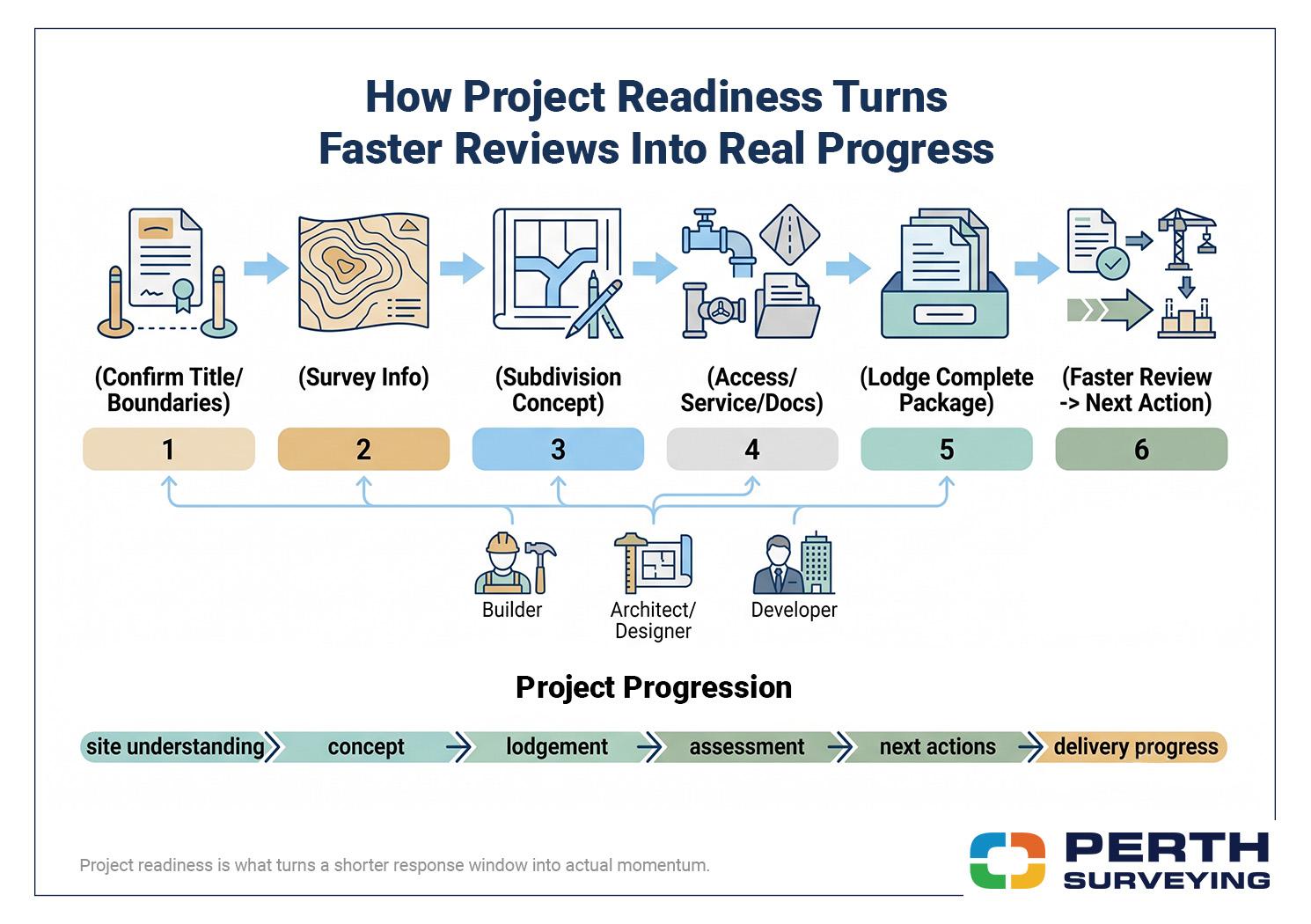
Developers can improve the likelihood of receiving a useful first response by checking three areas before lodgement: survey quality, alignment between project documents and clear responsibility for outstanding conditions.
The Developer’s Pre-Submission Readiness Test
Before engineering drawings are lodged, developers should test whether the project is genuinely ready for assessment.
Start with the base information. Confirm that the feature survey accurately records the site conditions, levels, improvements and constraints relied on by the engineering team. Where site conditions have changed, update the survey before finalising the design.
Next, compare the documents. Engineering drawings should align with the approved subdivision layout, current survey information and known servicing requirements. Any discrepancy identified internally should be resolved before it becomes a formal local government query.
Actively manage subdivision conditions through a register recording each requirement, the responsible party, the required evidence and any dependent tasks.
Confirm external inputs before submission, including drainage, utilities, access, roads and servicing requirements.
Finally, nominate one person to coordinate the response process, assign actions, follow up with consultants and lodge revised information.
Submission should be the end of the preparation stage, not the beginning of it.
Where Subdivision Fieldwork and Administration Protect the Programme
Surveying is more than a single technical task within the subdivision process. It provides reliable site information for engineering design, project coordination and later approval requirements.
Accurate subdivision fieldwork can confirm existing features, levels, boundaries, and site conditions before incorporating them into engineering drawings. It can also help ensure that approved plans, design information, and ground conditions stay aligned as the project progresses.
Subdivision administration protects the programme differently.
For example, updated fieldwork may identify that site levels, existing improvements or drainage features differ from the information used in the engineering design. Identifying the discrepancy before lodgement allows the surveyor and engineer to coordinate revised drawings before they become a formal local government query.
At the same time, a condition register can track the required evidence, responsible consultant and outstanding actions, helping prevent the project from stalling later during subdivision clearance.
Perth Surveying supports developers with coordinated subdivision fieldwork and dedicated subdivision administration. Although surveyors cannot control local government decisions, reliable survey information and structured condition tracking can reduce coordination gaps and help project teams respond promptly to feedback.
Clear deliverables. Clear timelines. Surveying that keeps projects moving.
Faster Responses Reward Better-Prepared Projects
The proposed 28-day response period could give developers greater certainty, but it will not remove the need for accurate survey information, coordinated drawings, resolved conditions and clear consultant responsibilities.
Developers are more likely to benefit when readiness is built into the programme before lodgement. Coordinated fieldwork, documentation and subdivision administration can help turn a defined review period into sustained project momentum.
Perth Surveying supports developers across Perth and broader Western Australia with subdivision field surveys, clear project information and dedicated subdivision administration.
Planning a subdivision or preparing drawings for review?
Call Perth Surveying on 08 9303 2407, email sales@perthsurveying.com.au or visit perthsurveying.com.au to discuss the surveying and administration support your project requires.
FAQs
Does the proposed 28-day period mean subdivision engineering drawings will be approved within 28 days?
No. The proposed timeframe relates to when local governments must respond, not when drawings must receive final approval. The response may accept the drawings, request amendments or seek further information. It should not be treated as a guaranteed 28-day approval for the entire subdivision.
What can delay a subdivision even with a 28-day response period?
Incomplete drawings, outdated survey information, unresolved conditions and conflicting consultant documents can still cause delays. A local government may respond within the required timeframe but request amendments or further information.
What should developers check before submitting engineering drawings?
Developers should ensure survey information is current, engineering drawings align with the approved subdivision plan, and responsibility for each outstanding condition is clearly assigned. Supporting documents, servicing requirements and consultant inputs should also be reviewed before submission.
